
Most entrepreneurs are wired to control outcomes. We plan, forecast, optimize, and push harder believing that our success depends entirely on our ability to manage every variable.
But what happens when control becomes a cage?
We see what many high-performing leaders eventually face: the burnout that comes from trying to control everything. Despite scaling multiple companies and achieving financial freedom, he found himself anxious, fearful, and disconnected.
The shift began when he started asking a deeper question:
“What if I’m not the one in control?”
That moment of surrender transformed not only his mindset but also his leadership, and it’s a shift that every entrepreneur can learn from.
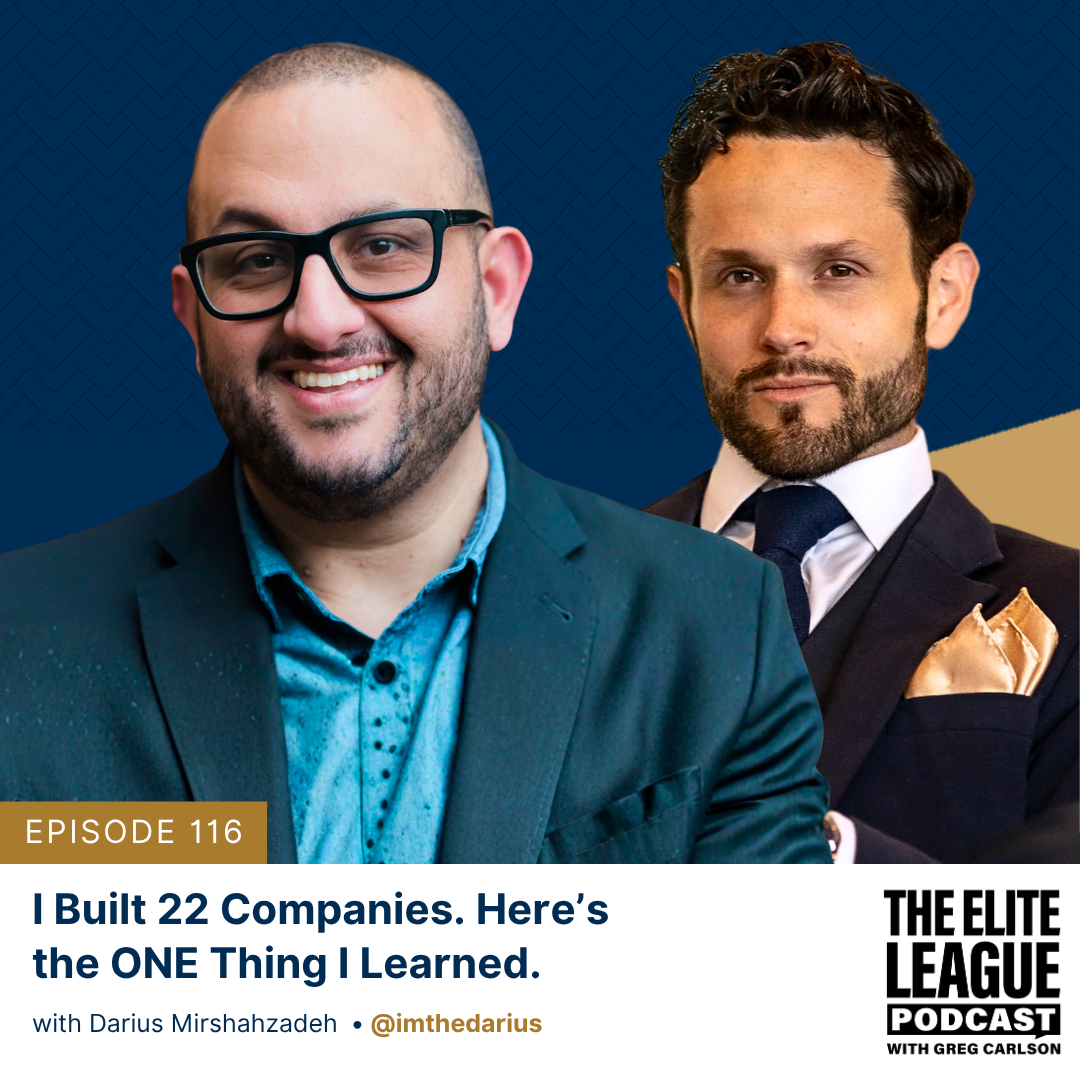
This concept was discussed in The Elite League Podcast, where entrepreneur and investor Darius shared his journey of building 22 companies, facing burnout, and discovering the power of surrender through self-mastery and mindset work.
Watch the full conversation to learn how letting go of control can unlock clarity, peace, and authentic leadership.
Lesson 1: Control Is the Enemy of Flow
In business, control often masquerades as discipline. We micromanage teams, obsess over metrics, and attach our self-worth to outcomes. But real high performance doesn’t come from control—it comes from flow.
When Darius practiced the meditative framework from Dr. Joe Dispenza’s “Breaking the Habit of Being Yourself”, he experienced a literal physical release. The act of surrendering and letting go of control unlocked a new level of creativity and peace.
How to Apply This
- Delegate, don’t dominate. Give your team ownership. The more you let others take responsibility, the more creative energy you free up for vision.
- Shift your focus to systems. Control the structure, not the people. Build frameworks that guide decisions without bottlenecking progress.
- Trust your preparation. Once you’ve done the work, release attachment to the outcome. Execution flows best without constant mental friction.
Ask yourself: Are you running your business, or is your business running you?
 Greg Carlson
Lesson 2: Redefine What “Winning” Means
For most entrepreneurs, winning means hitting revenue targets, scaling headcount, or closing deals. But those achievements often bring only temporary satisfaction—because success built on external validation fades fast.
Darius realized he was living on what psychologists call the hedonic treadmill—the endless chase for the next milestone that never fulfills.
True winning comes from alignment, not accumulation.
How to Apply This
- Set “inner” KPIs. Alongside financial metrics, track emotional indicators: peace, energy, gratitude, fulfillment.
- Celebrate the process. Make your goal to improve your state, not just your status.
- Build a culture around purpose. Help your team connect their daily work to something bigger than the bottom line.
When leaders prioritize inner metrics, they create companies that are not just profitable, but alive.
 Greg Carlson
Lesson 3: Surrender as a Growth Strategy
Surrender doesn’t mean giving up. It means giving over and releasing the illusion that every result must come from personal force.
It’s the difference between rowing harder and catching the wind.
When Darius stopped “white-knuckling” his success, he didn’t become passive—he became present. He began focusing on showing up fully in each moment, serving others, and allowing the outcomes to unfold naturally.
This shift created more impact with less resistance.
 Greg Carlson
How to Apply This
- Adopt a 10-second mindset. Instead of obsessing over future results, focus on maximizing the next 10 seconds of presence, clarity, or service.
- Replace control with curiosity. When things go wrong, ask, “What is this trying to teach me?” instead of “How do I fix this right now?”
- Practice surrender daily. Through meditation, journaling, or even walking without your phone, learn to quiet your mind and reconnect with flow.
Surrender is an advanced form of leadership awareness.
Lesson 4: From Fear to Faith
Darius started his self-work by confronting fear, which is the most common hidden driver of entrepreneurs. Fear of failure, fear of judgment, fear of losing what we’ve built.
When you operate from fear, you close off creativity. When you operate from faith (faith in your preparation, your vision, or a higher intelligence) you lead with calm conviction.
 Greg Carlson
How to Apply This
- Reframe fear as feedback. When you feel anxious, ask what belief is being challenged. Fear points to where growth is needed.
- Visualize release. In meditation or quiet moments, imagine fear as energy leaving your body.
- Anchor in something greater. Whether it’s faith, purpose, or community, find a grounding source bigger than yourself.
When you lead from faith, you lead from abundance, not scarcity.
Lesson 5: Shift from Achievement to Service
The most profound transformation came when Darius realized this:
“What if I stopped chasing goals and just showed up to live my talents in service of others?”
That mindset changes everything.
Entrepreneurs who orient their work around service find more meaning, magnetism, and momentum. The results follow naturally.
How to Apply This
- Turn success into significance. Instead of asking “What do I want to achieve?”, ask “Who can I help?”
- Infuse service into culture. Recognize acts of collaboration, not just competition.
- Measure impact differently. Track how many lives your business improves, not just your profit margins.
When your goal shifts from getting to giving, you tap into an inexhaustible source of motivation.
Final Thought: Letting Go Is the New Growth Hack
For high achievers, surrender might sound counterintuitive, but it’s the missing link in sustainable success.
Letting go of control doesn’t mean losing power. It means reclaiming the energy you’ve been wasting trying to force outcomes.
When you stop gripping so tightly, you create room for innovation, peace, and real leadership to emerge.
And ironically, that’s when you start winning again.
👉 Want more strategies like this? Subscribe to Elite League Mastermind, where we break down lessons from The Elite League Podcast and show you how to apply them directly to your business.

Member discussion